AI Tools Blog
ElevenLabs vs HeyGen: Eleven v4 and HeyGen Voice Compared

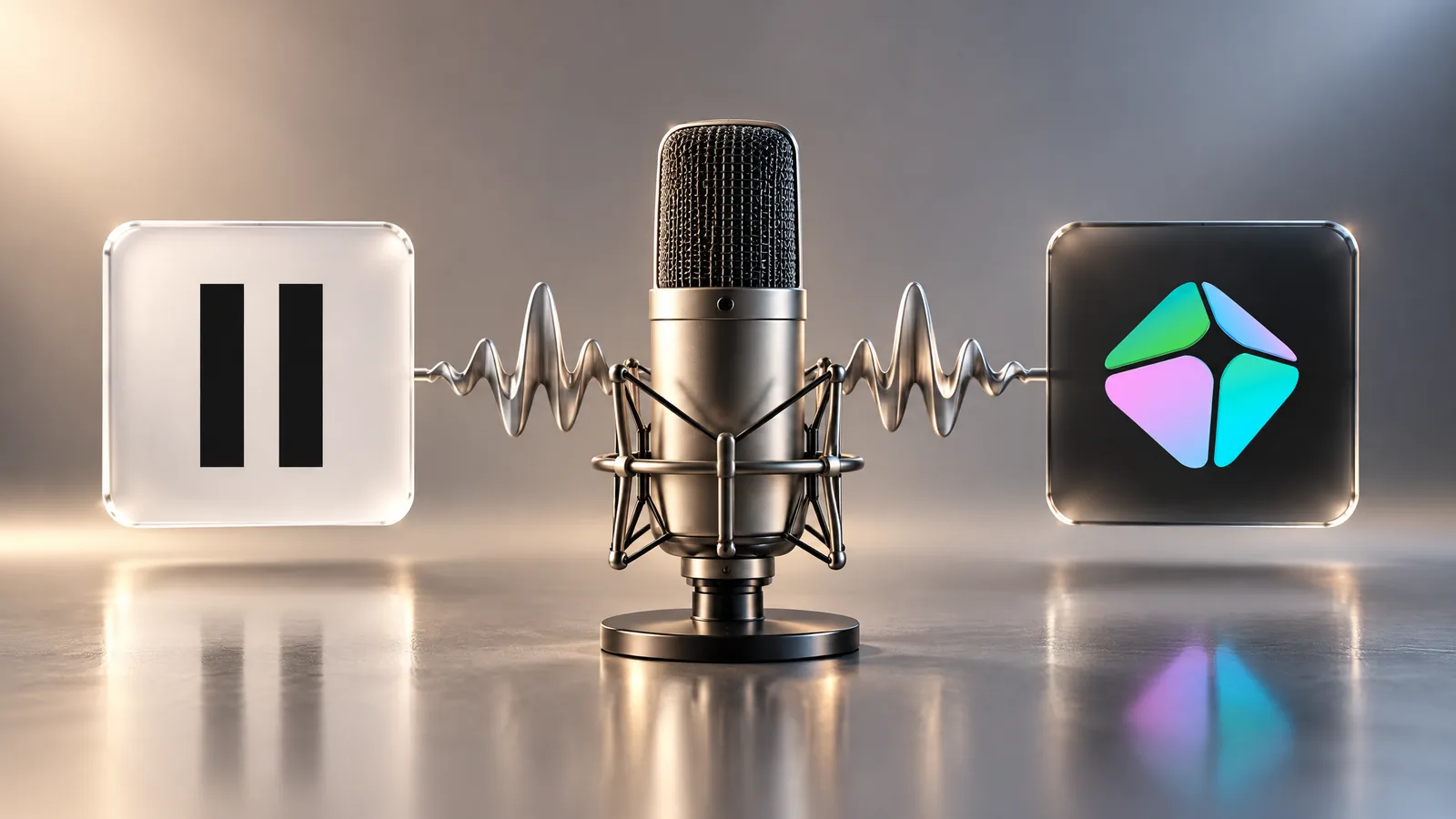
ElevenLabs vs HeyGen used to be an easy call: one made voices, the other made avatar videos. That changed on October 9, 2026, when HeyGen launched its own voice model, eleven days after ElevenLabs shipped Eleven v4. Both companies now say they are number one on Artificial Analysis, and both are right, because they top different leaderboards. This comparison explains what each ranking measures, what the models cost per hour of speech, where each falls short, and which one makes sense for narration, avatar video or a real-time app.
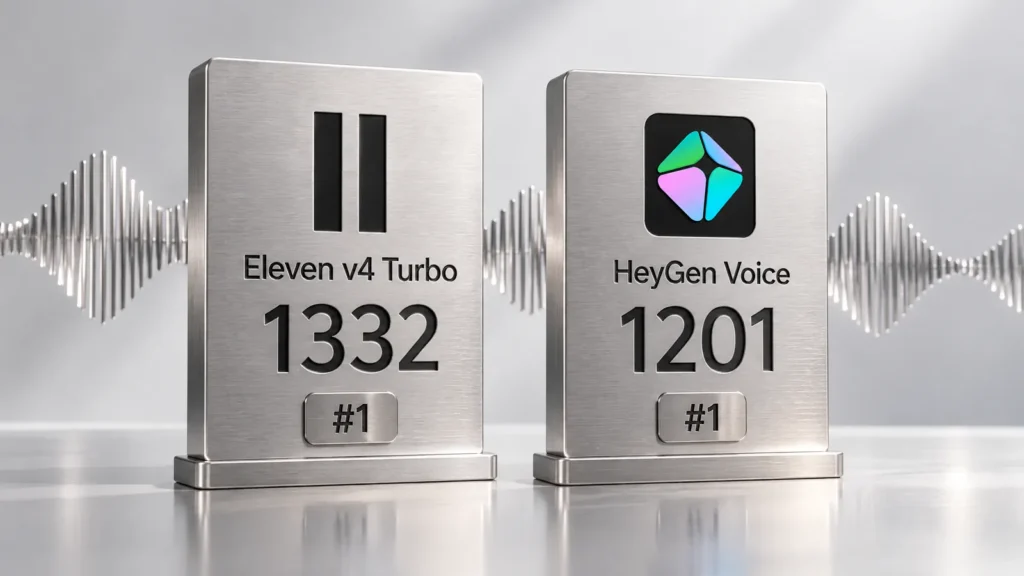
- Eleven v4 Turbo leads Artificial Analysis' Provider Voice leaderboard at 1332 Elo; HeyGen Voice does not appear on that board.
- HeyGen Voice led the Controlled Voice (voice cloning) leaderboard in the October 9, 2026 snapshot at 1201 Elo, ahead of Qwen at 1182 and Eleven v4 Turbo at 1166.
- API list prices per million characters: HeyGen Voice $30, Eleven v4 Turbo $40, Eleven v4 $80.
- HeyGen Voice costs nothing extra inside HeyGen videos; Eleven v4 is the stronger pick for standalone audio and documents support for 90+ languages.
- HeyGen Voice trails on pronunciation robustness and abbreviation handling, so test scripts with numbers and acronyms before committing.
Two launches, two leaderboards
ElevenLabs released Eleven v4 on September 28, 2026. HeyGen followed on October 9 with HeyGen Voice, the first speech model it has built in-house. Each press release says the model debuted at number one on Artificial Analysis, the independent benchmarking site. Neither claim is false. Artificial Analysis runs more than one text-to-speech arena, and the two models lead different ones.
Provider Voice: each company’s own voices
This board pits each provider’s stock voices against each other in blind listening tests. As of October 21, 2026, the top five are Eleven v4 Turbo (1332), Eleven v4 (1327), Alibaba’s Qwen-Audio-3.1-TTS-Plus (1301), Cartesia Sonic 3.6 (1289) and Google’s Gemini 3.8 Flash TTS (1279). HeyGen Voice is not listed.
Controlled Voice: everyone clones the same speakers
Here every model clones the same reference voices and listeners pick the better clip. HeyGen published the October 9, 2026 snapshot on its research page:
| Rank | Model | Elo (95% interval) |
|---|---|---|
| 1 | HeyGen Voice | 1201 ±17 |
| 2 | Qwen-Audio-3.1-TTS-Plus | 1182 ±15 |
| 3 | Eleven v4 Turbo | 1166 ±14 |
| 4 | Eleven v4 | 1162 ±15 |
| 5 | Sonic 3.6 | 1142 ±14 |
Two caveats matter. The intervals for first and second place overlap, so HeyGen’s lead over Qwen is a direction rather than a settled result. And according to AlphaSignal’s breakdown, all eight reference voices are English: four American, four British. If your audience speaks anything else, neither leaderboard tells you much.
Eleven v4 at a glance
ElevenLabs calls Eleven v4 its most emotive model and says it sits on an entirely new architecture. It ships in two variants:
- Eleven v4 targets maximum quality, supports natural multi-speaker dialogue and accepts up to 10,000 characters per request, roughly ten minutes of audio.
- Eleven v4 Turbo targets real-time use. ElevenLabs reports a median inference latency of about 100 ms and a median time to first speech of about 150 ms, measured over WebSocket streaming with network time removed.
The launch post highlights more accurate handling of inline audio tags such as [laughs] and natural-language direction, better IPA pronunciation control, more reliable stitching of long-form generations, and voice identity that holds across dialogue and regenerated lines. Quick voice clones work from as little as 10 seconds of audio, and Professional Voice Clones are now supported on v4. ElevenLabs’ model documentation lists 90+ languages for the v4 family, and a voice recorded in one language can speak the others while keeping its identity.
HeyGen Voice at a glance
HeyGen’s pitch is scene awareness. The model takes your voice sample, a script and the target image, then shapes delivery and acoustics to match what is on screen: close-mic intimacy for a studio shot, open-air sound outdoors, projected speech with room reverb in a hall. HeyGen’s product page lists the controls:
- A quick clone from about 60 seconds of audio, or a Professional model trained on 30 minutes to two hours of recordings.
- A 1–4 similarity scale, from “adapt to the scene” to “sound exactly like my recording”.
- Scene sliders for pitch variation, background level and ambient steadiness, plus an expressiveness boost.
- A text-to-speech API with streaming over SSE and optional word timestamps for captions.
The weak spots are worth knowing. Per AlphaSignal’s reading of the Artificial Analysis data, HeyGen Voice scores 83.1% on pronunciation robustness, tenth of 29 models, and 77.0% on expanding abbreviations, against 94.1% for Eleven v4. It also places fourth in the entertainment category, which suggests dramatic reads need their own test.
Price per hour of speech
Both companies publish per-character API prices. Using ElevenLabs’ own rule of thumb that 10,000 characters is about ten minutes of audio, an hour of speech is roughly 60,000 characters. Prices below were checked on October 21, 2026; the per-hour column is our estimate.
| Model | API price per 1M characters | Approx. cost per hour of speech |
|---|---|---|
| HeyGen Voice | $30 | About $1.80 |
| Eleven v4 Turbo | $40 | About $2.40 |
| Eleven v4 | $80 | About $4.80 |
Subscription pricing works differently on each side. ElevenLabs sells credit plans: Free (10,000 credits a month, no commercial license), Starter at $6 (30,000 credits), Creator at $22 with the first month at $11 (121,000 credits and one Professional Voice Clone) and Pro at $99 (600,000 credits). ElevenLabs says text-to-speech generally uses about one credit per character but does not list a separate rate for v4.
HeyGen sells video plans, and its voice model rides along: the product page says HeyGen Voice is included in every HeyGen video at no extra cost. Plans run from Free (three watermarked videos a month, up to one minute each) to Creator at $29 monthly or $24 a month billed yearly, Pro from $49, and Business at $149 plus $20 per seat. The Professional Voice Clone is a separate add-on. HeyGen’s launch release priced it at $99 a month; the product page currently shows $29 a month, marked down from $99. Go by the price shown at checkout.
Languages: check before you commit
ElevenLabs documents 90+ languages for the v4 family in its model docs. HeyGen Voice’s page only names English, Spanish, German, French and Chinese in its evaluations and examples; it does not publish a full language list for the new model.
HeyGen as a platform covers far more languages, but not always with its own model. Its help article on using voices in AI Studio lists the engines as Auto, ElevenLabs, Panda, Starfish and Fish, and recommends ElevenLabs V3 for languages other than English. So a non-English HeyGen video today may well be voiced by ElevenLabs under the hood. If you localize content, check the engine selector in the voice panel and preview what Auto picks.
Which one should you use?
- Audiobooks, podcasts, narration and long documents: Eleven v4. It leads the stock-voice board, handles multi-speaker dialogue, keeps tags and pronunciation under control, and has the broader documented language list.
- Talking-head and avatar video: HeyGen Voice. You are already paying for HeyGen, the voice costs nothing extra, and scene-aware delivery solves a real problem: cloned voices that sound like they were recorded in a different room from the picture.
- Voice agents and real-time apps: Eleven v4 Turbo if latency is the priority, HeyGen Voice’s API if cost per character is. Run both on your own scripts first, especially ones heavy with numbers, dates and acronyms, where the abbreviation gap shows up.
A quick, fair test takes about fifteen minutes on free accounts: write one 500-character script containing a date, a price, a percentage and two acronyms; clone the same 60-second recording on both platforms; generate with Eleven v4, Eleven v4 Turbo and HeyGen Voice at similarity levels 2 and 4; then have someone listen blind and note mispronunciations.
If you want to try either tool, the related plans in our store are below.
 ElevenLabs Creator – 131,000 Credits, 1 MonthIn stock Price range: $6.00 through $13.50
 HeyGen Creator – 1 MonthIn stock$15.00
Both leaderboards are live, and first place has changed hands before: Cartesia’s Sonic 3.5 led the Controlled Voice board before HeyGen arrived. Treat any “number one” claim as a snapshot, and let your own listening test decide.
Frequently asked questions
Is Eleven v4 or HeyGen Voice better?
It depends on the test. Eleven v4 Turbo leads Artificial Analysis' Provider Voice leaderboard (stock voices) at 1332 Elo. HeyGen Voice led the Controlled Voice leaderboard (voice cloning) in the October 9, 2026 snapshot at 1201 Elo. Both rankings use English voices only.
Is HeyGen Voice free?
Inside HeyGen, yes: HeyGen says the model is included in every HeyGen video at no extra cost, though you still need a HeyGen plan for video limits. Through the API it costs $30 per million characters. The Professional Voice Clone add-on is billed separately.
How much does Eleven v4 cost?
On the API, Eleven v4 is $0.08 per 1,000 characters ($80 per million) and Eleven v4 Turbo is $0.04 per 1,000 ($40 per million). On subscriptions, ElevenLabs plans start with a free tier of 10,000 credits a month, then Starter at $6 and Creator at $22.
What is the difference between Eleven v4 and Eleven v4 Turbo?
Eleven v4 aims for top quality and multi-speaker dialogue, with a 10,000-character limit per request. Eleven v4 Turbo is built for real-time use, with a median inference latency of about 100 ms, and costs half as much on the API.
Does HeyGen use ElevenLabs voices?
HeyGen offers several voice engines in AI Studio, including ElevenLabs, Panda, Starfish and Fish, alongside its new in-house model. Its help center recommends ElevenLabs V3 for languages other than English.
How many languages does each model support?
ElevenLabs lists 90+ languages for the Eleven v4 family. HeyGen has not published a full language list for HeyGen Voice; its product page names English, Spanish, German, French and Chinese.
Sources
- Introducing Eleven v4, our most emotive model — ElevenLabs, 21 October 2026
- Models — ElevenLabs Docs, 21 October 2026
- ElevenLabs API pricing — ElevenLabs, 21 October 2026
- ElevenLabs pricing — ElevenLabs, 21 October 2026
- HeyGen Launches HeyGen Voice, Debuting at #1 on Artificial Analysis' Leaderboard — HeyGen / PR Newswire, 21 October 2026
- HeyGen Voice: Scene-Aware Voice Cloning for Talking Videos — HeyGen Research, 21 October 2026
- HeyGen Voice — HeyGen, 21 October 2026
- HeyGen pricing — HeyGen, 21 October 2026
- Using Voices in the AI Studio — HeyGen Help Center, 21 October 2026
- Text to Speech Leaderboard — Artificial Analysis, 21 October 2026
- HeyGen Voice Beats ElevenLabs and Alibaba to Top TTS Rankings — AlphaSignal, 21 October 2026